
Nigerian Newspapers
Nets key to cutting malaria deaths and illness – UNICEF

Malaria still kills 660,000 people every year, most of them African children. Universal coverage of insecticide-treated bed nets is key in making gains against malaria – one of the largest killers of children in the world in the world, says UNICEF on World Malaria day.
With partners, UNICEF champions and supports governments to undertake the free distribution of insecticide-treated nets – especially long-lasting insecticidal nets. When universal coverage – one net for every two people – is reached this simple, effective barrier can reduce child mortality by up to 20 per cent.
In 2004, there were just 5.6 million bed nets in sub-Saharan Africa. Until recently limited competition among producers meant that they were too expensive to scale up. However, by 2010, bulk buying, joint procurement, better financing and extending manufacturing capacity into Africa meant that this number had increased to 145 million. A sustained, driven focus on high coverage with this very effective anti-malarial intervention contributed greatly to the 1.1 million lives that have been saved and a one-third decline in African malaria mortality rates that have been recorded since 2000.
“It is unacceptable that every day more than 1,500 children still die from a preventable and curable disease,” said Nicholas Alipui, UNICEF’s Director of Programmes. “We must distribute insecticide-treated nets to all who need them, provide timely testing for children and appropriate medicine when they are infected.”
A three-day treatment will cure malaria infections, especially if an episode is diagnosed early enough and treated appropriately – in particular with artemisinin-based combination therapies (ACTs). But many children, especially in Africa, still die from malaria as they do not sleep under insecticide-treated bed nets and are unable to access life-saving treatment within 24 hours of the onset of symptoms.
UNICEF supports national efforts to train and provide community health workers with simple tools such as malaria rapid diagnostic tests so that children receive medicine quickly when needed. However, in Africa the proportion of treated children who receive a first-line treatment such as an ACT is less than 30 percent in most countries.
UNICEF, with governments, donors and other partners, also looks for innovative ways to reach the most vulnerable and hardest to reach children in pursuit of universal coverage. For example, in addition to free net distributions during mass campaigns in the poorest and most remote areas, nets are also provided to children during routine immunizations and to pregnant women during ante-natal check-ups. UNICEF is also stepping up its efforts on integrated community case management, which brings a package of life-saving interventions closer to children, families and homes.
It is estimated that enough nets were delivered over the last decade to cover 80 per cent of requirements in Sub-Saharan Africa. Many nets however are reaching the end of their useful life and must be replaced. Countries that had already reduced their malaria burdens by up to 50 per cent can quickly detect increased cases and deaths due to malaria if old, worn-out nets are not replaced.
From 2000 to 2010, the proportion of children sleeping under an insecticide-treated net in sub-Saharan Africa grew from less than 5 per cent to over a third. But global procurement of long-lasting lasting insecticidal nets has dropped by 52 per cent against an annual target requirement of 150 million. Such a slowdown risks gravely undermining the gains to date.
“We have made considerable progress in this fight, but cannot take our eyes off the goal of reducing malaria cases and deaths to zero. We must make sure that countries have the funding they need for malaria control and use it to protect their children and expectant mothers,” Mr. Alipui added.
Fighting malaria not only saves the lives of children, but also yields many other health and economic benefits for affected communities. For example, reducing malaria improves the health of pregnant mothers and therefore their newborn babies, reduces school and work absenteeism. Eliminating malaria reduces the burden on over-stretched health centres. It is estimated there is a 40-fold return for every US$ 1 spent controlling malaria in Africa.
There have been impressive gains and successes built on strong partnerships and the generous contributions of many donors – but these gains can be quickly lost if sustained focus and investments are not maintained.
————————————————————————————————————————-
Posted in Nigerian Newspapers. A DisNaija.Com network.
Source: The Nation Newspaper
DisNaija.Com publishes regular posts on Nigeria News, Nigerian Newspapers, Online Nigeria Gist.
Follow us on Twitter and Facebook.
Your Opinion Counts. Be sure To Leave A Comment, If You Have Any.
Please Like, Share or Tweet. Your Support Is Appreciated.
•Deploy more personnel as army chief vows to wipe out terror group
•Security beefed up at N’Assembly
Deji Elumoye and Kingsley Nwezeh in Abuja
Abuja, Nigeria’s seat of power, is under a massive security cordon following threats of attacks by insurgents and the increasing wave of banditry in the contiguous states of Kaduna, Kogi, Nasarawa and Niger States, THISDAY’s investigation has revealed.
There has been a wave of kidnappings in the outskirts of the federal capital, notably Pegi, Tuganmaje and Kuje among others, which the police have battled in recent times.
The security situation in and around the Federal Capital Territory (FCT) was heightened by the pronouncement of the Niger State Governor, Mr. Sani Bello, that Boko Haram fighters who he said sacked 50 villages in the state and hoisted the terror group’s flag, were about two hours drive away from the FCT.
Security has also been beefed up at the National Assembly as operatives, yesterday, thoroughly screened every vehicle approaching the National Assembly complex in Abuja.
The deteriorating security situation nationwide prompted the National Chairman of the Peoples Democratic Party (PDP), Prince Uche Secondus, to warn that the 2023 general election may not hold, demanding the declaration of a state of emergency as well as the convocation of a national conference.
However, the Chief of Army Staff, Lt. Gen. Ibrahim Attahiru, yesterday restated the Nigerian Army’s determination to annihilate Boko Haram.
But the Governor of Katsina State, Hon. Bello Masari, cautioned against declaring a state of emergency, saying doing so isn’t the solution to combat the security challenges facing the country.
The security of the nation’s airports was also in focus yesterday as the Office of the National Security Adviser (ONSA) said there was no threat to them.
THISDAY’s investigations showed increased presence of troops, police, Nigerian Security and Civil Defence Corps (NSCDC) personnel and intelligence operatives at the three strategic entrances to the city notably, Keffi, Zuba and Gwagwalada.
More checkpoints were also mounted around Gwagwalada and Keffi.
THISDAY also observed increased intelligence deployment at the entrance and the borders of FCT with contiguous states.
Beyond the borders, there were more deployments and police patrols inside the city and increased intelligence deployments as well.
Security sources told THISDAY: “There are deployments here and there but they are routine. Alertness is key to a secure environment.”
It was also learnt that security agencies were involved in frenzied meetings throughout yesterday.
The meetings, coordinated by the office of the Chief of Defence Staff under the new joint operational strategy of the armed forces, were aimed at coordinating a joint response to possible threats of attack to the FCT.
“I understand the security teams have been meeting for some days now and if you look around you, you will notice that there are increasing patrols and numbers of security personnel. The threats are not been taken lightly,” a source said.
National Assembly workers, lawmakers and visitors also had a harrowing experience accessing the legislative complex due to heightened security in the area.
Security operatives thoroughly screened every vehicle approaching the National Assembly complex in Abuja, impeding both human and vehicular traffic.
The Sergeant-at-arm of the National Assembly and other security agencies supervised the operations, leading to huge traffic build-up inside the complex.
Legislative staff, visitors and lawmakers were seen patiently waiting for their cars to be searched so that they could go ahead with the business of the day.
Some staff and visitors at some point got tired of waiting and were seen alighting from their cars to trek from the gate to the complex.
Meanwhile, the ONSA has said there is no threat to the nation’s airports.
A statement by the Head of Strategic Communication, Mr. Zachari Usman, said the reports of threats to the airports were an internal correspondence of security threat assessment misconstrued as security threat to the airports.
PDP Demands State of Emergency
In a related development, the PDP National Chairman, Prince Uche Secondus, yesterday demanded the declaration of a state of emergency, warning that the 2023 general election might not hold if the federal government failed to tackle insecurity.
He called on the federal government to summon a national conference to address the spike in insecurity.
Secondus added that the national caucus of the party will meet today to discuss the state of the nation.
Addressing members of the National Executive Committee (NEC) in Abuja, Secondus said: “We are worried Abuja is not even safe. It is no longer politics. We got alert of plots to bomb and burn down our airports.
“We urge the federal government to declare a national state of emergency in security. There is the need to call a national conference to discuss the insecurity in the country.
“There may not be any election in 2023 in Nigeria due to insecurity. This government must listen to the people. The Buhari government should call a national confab to discuss security and state of the nation. It is no longer politics. This time we are not playing politics. Let’s keep politics aside and move the nation forward.”
He said the country had been grounded, regretting that there had been no matching response from the federal government.
Secondus said in the past, terrorism in the North was confined to the North-east, but with the report of Boko Haram occupying villages in Niger State, terrorism had spread to the North-central
“Herdsmen are also menacing in the West; gunmen causing havoc in the East; and the militants in the South; all killing, looting, raping, maiming and burning down homes. The situation is bad; Nigerians all over are living in fear,” he said.
The Senate Minority Leader, Senator Enyinnaya Abaribe, said the problem of Nigeria was outside of the PDP headquarters, while pledging the support of the Senate to the declaration of state of emergency in security.
Abaribe said he deliberately decided not to speak on the floor of the Senate but to allow the APC senators to speak so as to avoid being accused of giving a partisan colouration to the issue of insecurity.
He stated that only electoral reforms would give victory to the opposition party in the 2023 general election and ensure a democratic defeat of the APC-led federal government.
Also, the Minority Leader of the House of Representatives, Hon. Ndudi Elumelu, commended the NEC and the PDP leadership for their collective efforts at resolving the House leadership crisis.
The NEC meeting adopted the position of Secondus, calling on the federal government to convoke a national conference to discuss the state of insecurity in the country, according to a communiqué read by the National Publicity Secretary, Mr. Kola Ologbondiyan.
Army Chief Vows to Wipe Out Boko Haram
The army yesterday reiterated its commitment to wipe out Boko Haram.
Chief of Army Staff (COAS), Lt. Gen. Ibrahim Attahiru, told reporters in Maiduguri, Borno State that Boko Haram had been defeated in many encounters and would continue to be defeated until it’s annihilated from Nigeria.
“We will take on Boko Haram decisively, and we are committed to the focus of the operations, which is the total annihilation of Boko Haram from Nigeria,” he said.
The COAS, who was visiting the headquarters of Operation Lafiya Dole in Maiduguri for the fifth time since his appointment four months ago, said the visit was to boost the morale of the troops, reassure them and listen to any issues affecting them.
Earlier, the Theatre Commander of Operation Lafiya Dole, Maj. Gen. Farouq Yahaya, lauded the visit, which he said had continued to boost the morale of the troops.
“We are honoured, we are grateful, we are encouraged by those visits. You provided us guidance, logistics and other things we required. We are most grateful for those visits,” Yahaya said.
State of Emergency Won’t Solve Security Challenges, Says Masari
Katsina State Governor, Hon. Aminu Masari, has, however, said declaration of a state of emergency won’t solve the security challenges facing the nation.
Masari, who spoke yesterday with journalists after meeting with the Chief of Staff to the President, Prof. Ibrahim Gambari at the State House, Abuja stated that he was against the recent call by the House of Representatives for the declaration of a state of emergency in the security sector as it would not solve the problem.
According to him, declaring a state of emergency will not achieve the desired effect as the security structure and personnel to be used to execute the emergency are already overstretched in a bid to safeguard lives and property.
Sourced From: THISDAYLIVE
Tribune Online
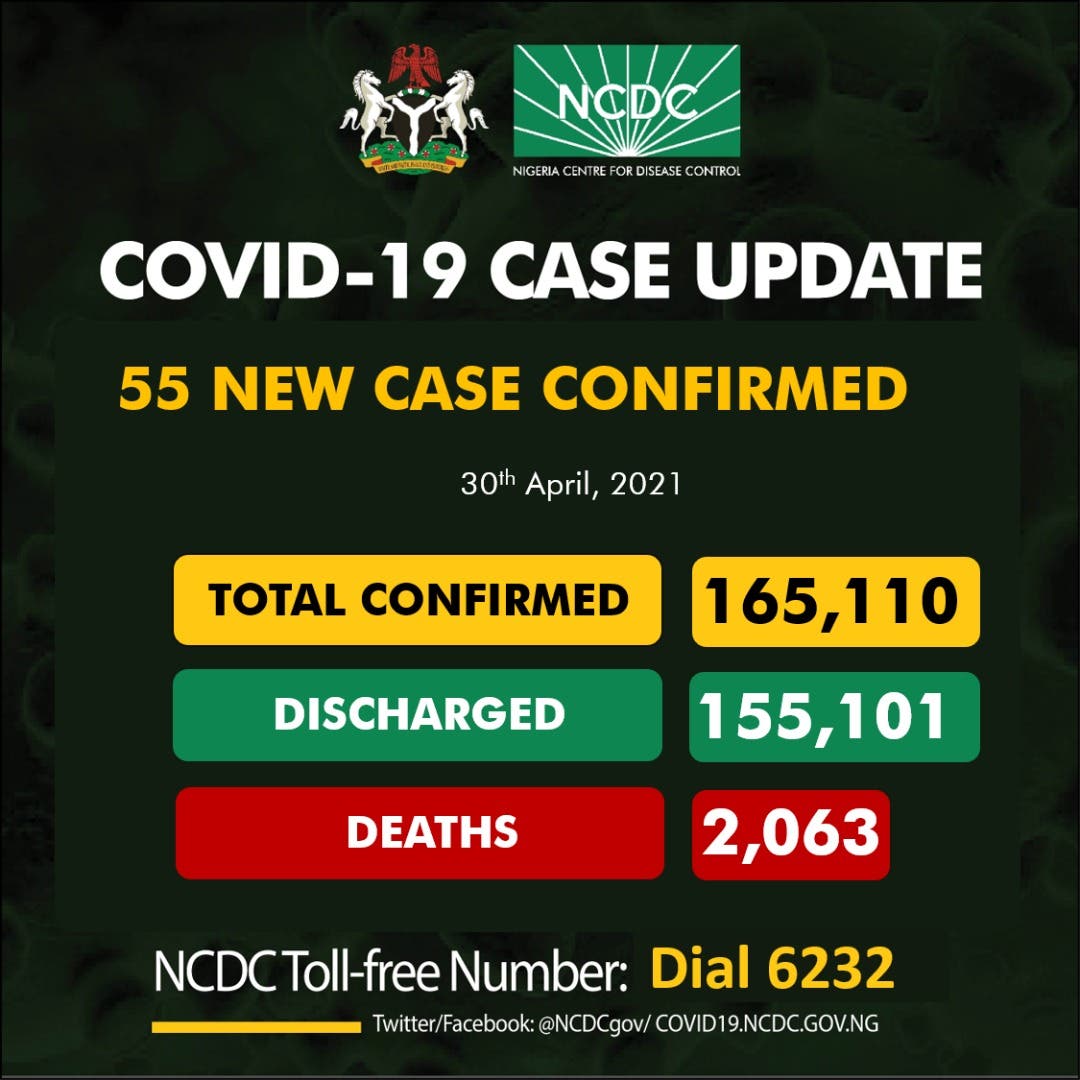
Nigeria records 55 new COVID-19 infections, total now 165,110
The Nigeria Centre for Disease Control (NCDC) has recorded 62 new cases of COVID-19, bringing the total number of infections in the country to 165,110. The NCDC disclosed this on its official Twitter handle on Friday. “55 new cases of #COVID19Nigeria; Lagos-21, Yobe-19, Ogun-6, Akwa Ibom-3, Kaduna-2, Plateau-2, FCT-1, Rivers-1.” YOU SHOULD NOT MISS THESE HEADLINES FROM NIGERIAN TRIBUNE COVID-19: Nigeria Recorded […]
Nigeria records 55 new COVID-19 infections, total now 165,110
Tribune Online
Sourced From: Tribune Online
By Olasunkanmi Akoni
The people of the South East region have been urged to explore the power of negotiation and mutual settlement in the face of ongoing killings and security challenges in the zone because the east can not afford another war at present.
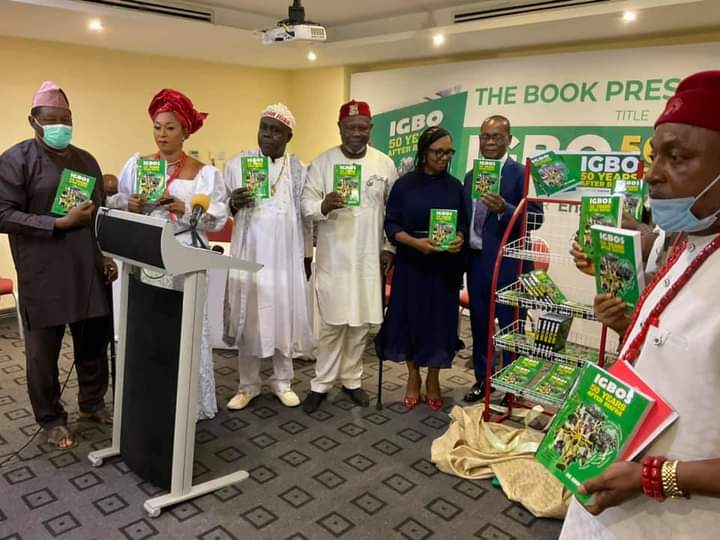
Stakeholders from the South-East geo-political zone made the remark on Thursday, at the unveiling of the book, “Igbo, 50 years after Biafra,” written by Special Adviser to Lagos State Governor Babajide Sanwo-Olu on Drainage Services, Joe Igbokwe, held at Ikeja G.R.A.
Speaking at the unveiling of the book, the chairman of the occasion, Mr. Cutis Adigba,
urged the people of the South-East to learn to build bridges across the country, so that they can realise their ambition of producing the next president of Nigeria.
Adigba urged leaders from the zone to discourage the move and agitation by some youths in the South East to go to war and secede out of Nigeria.
Also read: Banditry: Disregard viral video, Niger State gov’t urges residents
He said that Igbo have always found it difficult to rule Nigeria because they refused to build bridges across the six geo-political zones that made up Nigeria.
While describing the agitation as uncalled for, Adigba noted that after two decades that Nigeria returned to civil rule, the Igbo has predominantly identified with only one political party.
He maintained that remaining in one party can not advance the cause of the people of South East and cannot make them realise their objective of producing an Igbo man as president.
He maintained that the publisher of the book, Igbokwe played politics outside his state, so that the Igbo race can be integrated with one another race.
Adigba said the failure of the Igbo to reintegrate with other ethnic nationalities politically was responsible for the retrogression of the race in Nigerian politics.
Igbokwe, also addressing guests on the occasion, maintained that the Igbo are not advancing politically because they refused to be integrated into National politics, lamenting that, despite their success in business, they are not successful in playing politics at the national level.
Corroborating Dimgba, Igbokwe noted that there was the need for the Igbo people to stand up and build bridges so that their objective of producing the next president of Nigeria could be realised.
According to him: “I have decided to raise my voice, I hope my people will hear me while trying to quell the effect of the war, our people are spoiling for another war, mayhem is being unleashed in Igbo land, and there is palpable fear.
“Those who could speak have lost their voice, mindful of the consequences of their actions, I am calling on all Igbo leaders to speak up because all actions carry consequences, consequences of the silence will be too dastardly to sustain.
“Those silently supporting the wild wind should be careful or else they hand over to their children,” he said.
Igbokwe urged those spoiling for war to jettison their plan and embrace dialogue, urging them to learn from the South West region that despite the challenges faced after the annulment of the June 12, 1993, election, they did not go to war, and the region had the opportunity of producing two of her sons for presidential position in 1999.
“You have to build bridges to become president of Nigeria, but it is unfortunate the Igbo are burning bridges.”
Speaking at the event, Chief Uche Dimgba who is the coordinator of Igbo in All Progressives Congress, APC in Lagos, described Igbokwe as “a Frank, fearless and reliable leader, who based his views on issues and stand by his opinions, and we the Igbo have confidence in him and believe he can lead us aright.”
“He is a leader we Igbo believe in and we will follow him. If he can serve all the governors produced in Lagos State since 1999, he is a better man to follow because he possesses all the experience that can be of benefit to Igbo both at home and in the diaspora.”
The post Attacks on S’East: We must explore all options of negotiation — Stakeholders urge Igbo appeared first on Vanguard News.
Sourced From: Vanguard News
The government said that no worker should stay back beyond 6:00 p.m. within premises of buildings undergoing construction.
The post Insecurity: Lagos bans occupation of abandoned buildings appeared first on Premium Times Nigeria.
Sourced From: Premium Times Nigeria
%22%20transform%3D%22translate(.6%20.6)%20scale(1.17188)%22%20fill-opacity%3D%22.5%22%3E%3Cellipse%20fill%3D%22%23fff%22%20cx%3D%2249%22%20cy%3D%2290%22%20rx%3D%2269%22%20ry%3D%22101%22%2F%3E%3Cellipse%20fill%3D%22%233e4b5a%22%20rx%3D%221%22%20ry%3D%221%22%20transform%3D%22matrix(18.18098%20254.35104%20-65.5502%204.68552%20198.3%20212)%22%2F%3E%3Cpath%20fill%3D%22%233e98e1%22%20d%3D%22M207.7-5.3l55.5-7.8%2023%20164.4-55.4%207.8z%22%2F%3E%3Cellipse%20fill%3D%22%2353aeed%22%20rx%3D%221%22%20ry%3D%221%22%20transform%3D%22matrix(-2.12327%20-30.36412%20119.36714%20-8.34696%2035.4%20194.8)%22%2F%3E%3C%2Fg%3E%3C%2Fsvg%3E)

Nigeria records 55 new COVID-19 infections, total now 165,110
Military, Police Ring Abuja to Forestall Boko Haram Attack
UFC: Usman gets N584m after beating Masvidal
Insecurity: Lagos bans occupation of abandoned buildings



Buhari Will Win In 2019: US Institute
The United States Institute of Peace (USIP) has predicted that President Muhammadu Buhari will win the 2019 election. The organisation...

Why Buhari Deserves Second Term – Lai Mohammed
The Minister of Information and Culture, Alhaji Lai Mohammed has said that President Muhammadu Buhari deserved second term election because,...

Atiku Presidential Campaign Council: PDP Releases List of Members
The Peoples Democratic Party (PDP) on Tuesday released the list of party members to handle the campaign team of the...
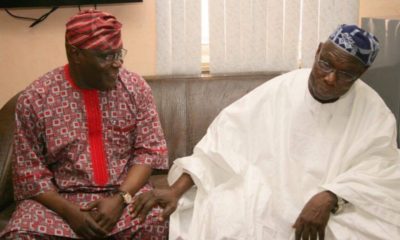

Obasanjo Forgives Atiku, Endorses Him For President
Former President Olusegun Obasanjo on Thursday said he has reviewed his stance on not backing his former deputy for the...
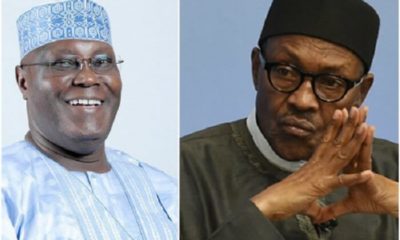

Buhari, Atiku In Battle Of Integrity Over 2019 Poll
THE brickbats continued yesterday between President Muhammadu Buhari and former Vice President Atiku Abubakar. The All Progressives Congress (APC) and...